Permaculture design is complex work. You’re not just deciding where to put a vegetable bed or which trees to plant along a fence line. You’re reading a landscape — tracking how water moves across it after a heavy rain, where the frost settles on a cold morning, which areas catch the harshest afternoon wind, and how all of those factors interact with each other across every season of the year.
It’s systems thinking applied to land. And it’s genuinely hard to do well.
Which makes it all the more frustrating that the tools most permaculture designers rely on haven’t changed much in decades.
The Current Reality
Ask most permaculture designers what their design process looks like and you’ll hear some version of the same answer. A site visit with a notebook. Hand-drawn sketches on graph paper. Google Earth for an aerial view. A spreadsheet for plant lists. Maybe a presentation tool to put together something client-ready at the end.
It works — sort of. But it’s slow, it’s disconnected, and it means spending as much time managing information across different tools as you do actually thinking about the design. Every time you switch from your sketch to your spreadsheet to your aerial image, you lose something. The picture in your head doesn’t always survive the translation.
For beginners the problem is even more pronounced. Without a clear, visual way to work through a design, permaculture can feel overwhelming before it even gets started. The principles make sense. The application is harder to see.
What Better Tools Would Make Possible
Good design tools don’t replace the designer’s knowledge and intuition — they amplify it. They take care of the mechanical parts of the process so you can focus on the thinking.
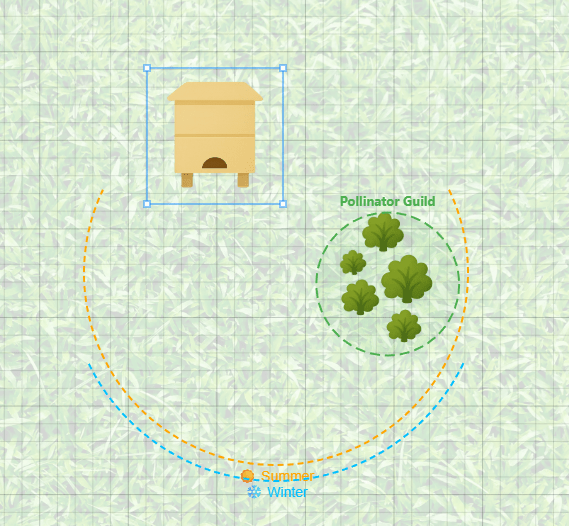
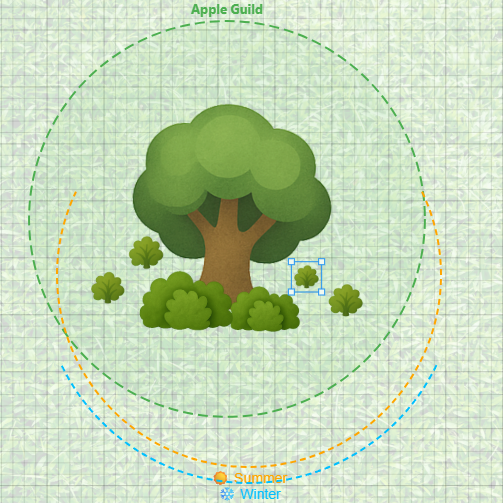
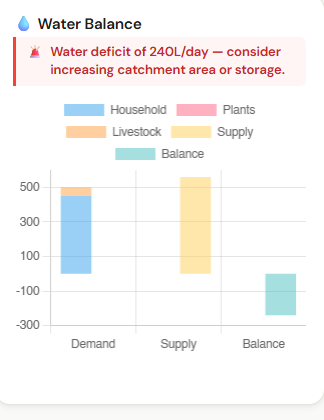
Imagine being able to draw your zones and sectors directly onto a real map of your property. To see your sun angles and water flow visualised in the same place as your plant placements. To track your yields and observations over time and watch your system evolve season by season — not in a separate spreadsheet, but connected to the design itself.
This isn’t a fantasy. These are straightforward capabilities that designers in architecture, landscape design, and urban planning have had for years. Permaculture has just never had its own version.
Why It Matters Beyond the Designer
Better tools don’t just make individual designers more efficient. They make permaculture more accessible.
When the barrier to starting a design is lower — when you don’t need years of experience just to get a clear picture of what you’re working with — more people can engage with these ideas seriously. More backyard food forests get planted. More degraded land gets a thoughtful plan behind its restoration. More families grow more of their own food.
The knowledge base of permaculture is rich and deep and has been built up over decades of careful observation and practice. It deserves tools that are equal to it.
That’s Why We’re Building the EarthWise App
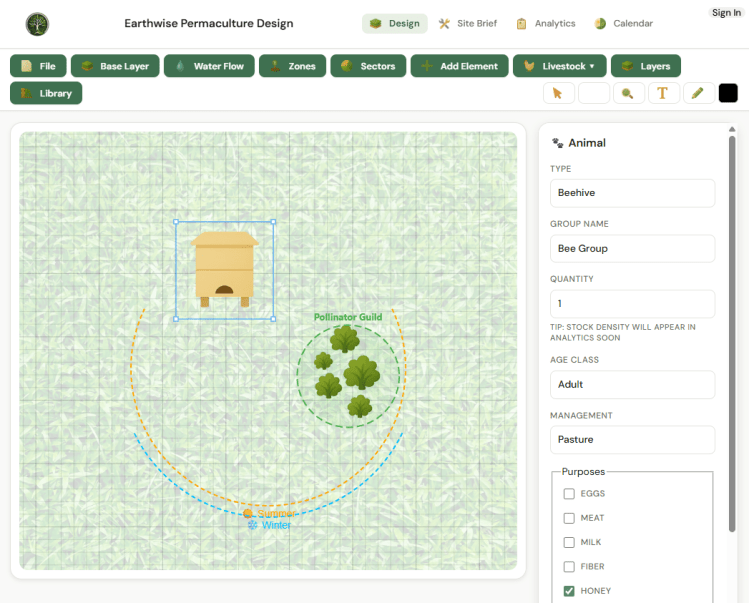
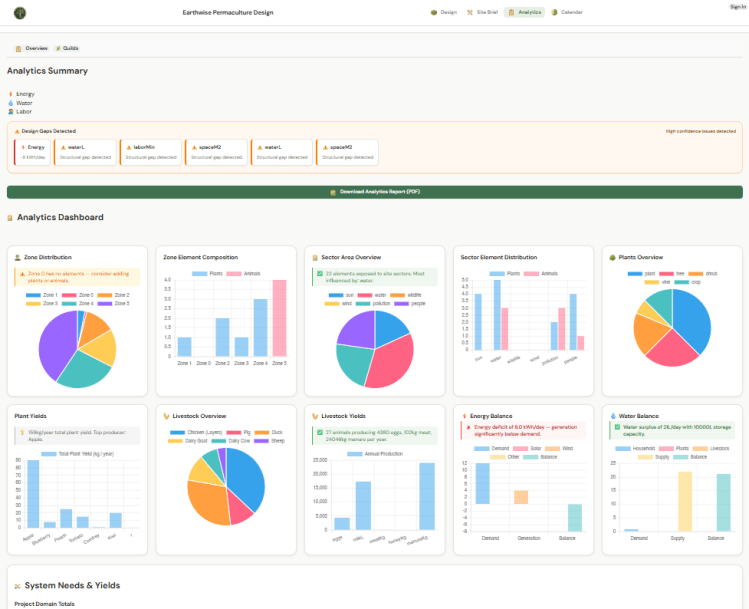
The EarthWise App is a permaculture design tool built specifically for how designers actually work — with an interactive design canvas, smart site analysis, and integrated data tracking, all in one place.
We’re launching on Kickstarter soon. If you’d like to be among the first to access it — and to get Early Bird pricing before the campaign goes public — you can join the waitlist at the link below.
The permaculture community has always found ways to do more with less. It’s time our tools caught up.
 EarthWise Permaculture